

Table of Contents
- Key Takeaways
- Introduction: E-Commerce (Part 2)
- E-Commerce Market Research
- Competitive Analysis
- Downloadable Research Template
- Identifying a Target Audience
- Product Research and Product Sourcing
- Branding in E-Commerce
- Anatomy of an Online Store
- Customer Engagement and Customer Loyalty
- Conclusion
Key Takeaways
- Why market research is critical for an e-commerce store’s success;
- How to get started conducting research in the most effective manner;
- How to out market competitive e-commerce stores in your same vertical;
- How to format a Competitor Analysis Template (free download included);
Introduction: E-Commerce (Part 2)
Would you like to know how to maximize your income potential on ANY e-commerce platform? Get a straightforward explanation on performing e-commerce market research – the true key for profitability!
Research will tell you the who (who are your ideal customers), the where (where do they prefer shopping), the why (why do they want to shop online), the what (what types of products and services are purchased by your target audience), and the when (when do they do most of their online shopping).
If your target audience does the bulk of their online shopping on a Wednesday or Thursday, then launching a sale that lasts Saturday & Sunday only, would not be very fruitful.
E-Commerce Market Research
There are two (2) types of market research used in e-commerce…
Primary Research
This is research that is essentially performed by yourself or your company.
This can be accomplished by conducting formal surveys, engaging in consumer interviews, direct observation of consumer behavior (consider visiting any brick-and-mortar store(s) operated by your competitors), or establishing marketing focus groups to measure consumer preferences.
The byproduct of this type of research is very valuable because you can gather information in such a manner that is very specific to your product, service, business or industry.
The main drawbacks to primary research are i) it requires a much larger budget allocation, and ii) it takes a lot more time and effort to perform.
Secondary Research
This typically means research conducted by other individuals, businesses (profit and non-profit), or governmental agencies.
It involves collecting information from sources that are publicly available, such as consumer studies, industry publications, trade journals, corporate interviews, transcripts of competitor’s earnings calls, Google Trends, and published analytics or data that you can obtain online from a variety of free or paid sources, just to name a few.
This process is also inherently more budget-friendly, since the source materials are already available online or from other published sources.
It also requires far less time as the threshold research has already been done for you.
The main drawbacks to secondary research are i) the information you discover might not be as specific to a product or service as you’d like, and ii) the marketplace itself may have already shifted since the article, study, or survey that you are relying upon, was completed.
Note: Always double-check the publication date of any publicly compiled resource you are citing.
3 Key Areas of Market Research
When you are conducting market research, the focal point of your research should be on three (3) key areas – market size, target audience and competition.
Here are the main questions you would want addressed:
- How much consumer demand exists for the product or service?
- What is the competitive landscape?
- How much competition exists?
- What type of competition is there?
- Can you differentiate from other e-commerce stores?
- E.g., provide better quality, lower pricing, faster shipping, easier returns, or a better rewards program?
- Is there room to scale or grow your e-commerce business?
- Does the price of your product or service fit your target audience’s budget?
Frequency and Timing of Research
The consumer market is always in a state of flux, so it is important to revisit your marketing research on a periodic basis.
The frequency of your research will be dependent upon your business’s needs.
For example, you may need to conduct research annually, or, you may only conduct market research when there’s a specific event (e.g., a new business startup, a product/service launch, or to assess a social media ad campaign).
Main Benefits of Market Research
Market research offers a variety of benefits, including but not limited to, the following:
- Maximizing the results of your marketing and advertising campaigns (e.g., ROAS – Return on Ad Spend).
- Improving your Return on Investment (ROI).
- Allocating your time and budget more effectively (e.g., investing in products or services that are likely to produce profitable results).
- Reaching more customers and improving the customer experience.
Competitive Analysis
One of the best methods of secondary research is to perform a competitive analysis of existing e-commerce stores in the same space or vertical.
For example, you are a manufacturer and distributor of Electric Bikes (E-Bikes) who now wishes to convert from a strictly brick-and-mortar operation to a click-and-mortar operation.
You would want to perform secondary research to assess three (3) to four (4) of your main competitors, before formally launching your new e-commerce site.
The areas you would want to focus on for your research would be your competition’s background story, customer service, content strategy, marketing strategy, shipping/return policies, and product details.
More specifically, you would develop a Competitor Analysis Template covering the areas below:
- General information (e.g., the website URL, types of E-Bikes sold, About Us and Return Policy information)
- Content strategy (website sections – e.g., blog content, downloadable buying guides, FAQs, catalogs, and social media accounts)
- Marketing strategy (e.g., current promotions – such as bundled packages, free shipping, price match guarantee, newsletter incentives, and rewards programs)
- Customer service and policies (e.g., methods of contact information, shipping & delivery terms, and return & exchange policies)
- Product comparisons for various makes and models of E-Bikes, categorized as followed:
- Product titles
- Product page URL
- Special features or services (e.g., free in-store assembly)
- Product images & videos – types of images and video content
- Consumer reviews (e.g., star ratings, testimonials, and social media posts)
- Pricing (i.e., a competitor’s online price, including shipping and handling)
Note: Be certain to include an analysis of your own e-commerce site, alongside the other competitive sites.
This will give you a much clearer perspective of how your site actually compares with your closest competitors.
Downloadable Research Template
Here is a link to a Competitor Analysis Template in a downloadable pdf format, using our E-Bike example from above…
Identifying a Target Audience
Knowing your target audience will guide and instruct your e-commerce store’s branding, marketing campaigns, and its pricing strategy.
In order to properly identify your target audience, information about your audience’s demographics and their personal characteristics will need to be gathered.
This information may be gathered through a variety of sources such as online surveys, personal interviews, and data analytics.
Let’s break down those two (2) categories with some specific examples of what you should be seeking to learn about your ideal customer:
Demographics
Age
Gender
Location
Family Status
Education level
Income / Salary
Current Occupation
Personal Characteristics
Behaviors
What stores do they like to shop at?
Who influences their buying decisions?
What motivates them to make a purchase?
Where do they go for advice or information?
Which social media sites do they prefer to use?
What type of media (in general) do they regularly consume?
Interests
How do they spend their free time?
What causes do they support?
What is important to them?
What are their hobbies?
Goals and Barriers
What goals do they want to achieve?
What are the barriers to achieving these goals?
How would your product or service make it easier to reach their goals?
So far, we discussed the two (2) primary ways to define your target audience. There are two (2) additional popular methods which can be used to accomplish this goal – they are as follows:
Existing Customer Data
Tap the information provided by your analytics platform, such as Google Analytics. This type of software generally has the ability to track demographic information (e.g., location, gender, interests, age, and language) for visitors to your site.
If your company maintains a customer relationship management (CRM) system, you would have access to a lot of valuable data from that source as well. A great example of an industry-leading CRM platform would be HubSpot.
Customer Reviews and Comments
This is where social media, forums and online chat rooms can play a vital role in helping a company to better understand who makes up their target audience.
If you have a Google Business Profile or a section of an existing website where written reviews are maintained, be sure to periodically monitor and assess what is being written about your products or services.
Facebook, for example, is one of the social media platforms that allows consumers to leave star ratings and comments about their experiences.
Sometimes ratings and written commentary are not factually accurate or even applicable to your particular business.
Note: Social media can be a great tool for gathering more information from existing and potential customers.
Consider creating a survey or questionnaire and posting same to your various social media accounts, along with a gift or monetary incentive to help maximize response rates.
Collecting and Organizing Audience Data
This collective data can and should be organized into a spreadsheet such as MS Excel or Google Sheets to help you identify patterns and trends about your existing and potential customers.
For example, you may find that 75% of your company’s customers are in their 30s and 40s, live in the suburbs, are college educated, value social activism, are involved in their communities, and prefer products and services that are eco-friendly.
Product Research and Product Sourcing
A fair amount of time and effort can go into first launching a new product or service, as well as an e-commerce store. Therefore, you are going to want to determine if there is a sufficient amount of demand for your product or service.
Product Research Methods for E-commerce
Demand is essentially measured by how much customers are willing to spend, and how able those customers are to spend on a given product or service over a specified period of time.
A tool like Google Trends can help you to assess and predict demand by setting up a comparison of products and measuring the interest level over time.
You can define your search parameters, for example, by the region or state where your target audience resides, or you can expand your query to include a nationwide, or even worldwide assessment.
Note: Filtering the Google Trends query to cover the last five (5) year period will give you a better sense of how the interest in a given product or service has been changing over time.
Applying these results to your target audience by asking if the product or service would meet a need or solve a problem, will help you forecast whether your product or service will ultimately be profitable.
Product Sourcing Methods for E-commerce
This is how an e-commerce store establishes its inventory, and is a critical factor that can determine the success or failure of an e-commerce store.
There are three (3) primary options when it comes to obtaining the products you are planning to sell online:
- Your company can design and manufacturer its own products – this would establish optimal control over branding, design and quality. Profit-margins would also be the highest under this scenario.
- Your company can affiliate with an outside vendor or wholesaler – you would be featuring already established brands that meet consumer demand. The e-commerce store would still be responsible for shipping & handling.
- Your company can outsource by partnering with a drop-shipper – drop-shipping involves products being shipped directly from a third-party supplier to a paying customer.
- This is typically the most expeditious way for an e-commerce store to distribute a product into the marketplace.
- The caveats would be that you are giving up a lot of control over shipping & handling, and your profit-margins would be the lowest under this scenario.
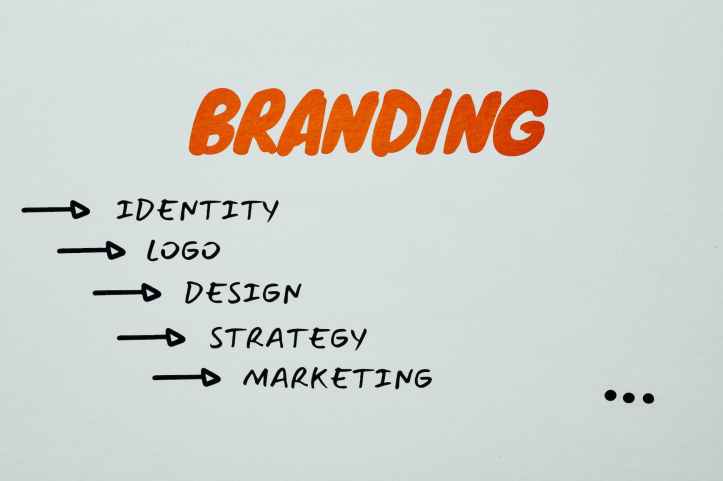
Branding in E-Commerce
Studies have shown that as many as 77% of consumers buy products and services from companies that share their core beliefs and values.
Branding simply means to promote a product or service by affiliating them with a particular brand.
This goes beyond a logo or name or model or tagline – it is more about these types of core areas…
- How does your company treat its customers?
- Do customers relate to your company’s values?
- How do people feel about your products or services?
- What is the story and who are the people behind the brand?
It is important to establish an emotional connection with customers, and your company’s values should be displayed on its website, blog, social media accounts, podcasts, case studies, newsletters, e-publications, etc.
Anatomy of an Online Store
There are several essential components that should be a part of every e-commerce store, and would be considered best practices in the industry:
Homepage – the main page of a website; contains links in a header or footer section to most if not all other pages.
Navigation Bar – a collection of links at the top of a website which remain visible, and typically include…
A Menu – with links to products organized by department or category.
Search Bar – customers can enter keywords into the search field based upon their interests.
Create/Sign In To An Account – customers are able to do things such as creating an account, modifying payment sources, and monitoring the status of orders.
Product Detail Pages (PDPs) – normally include descriptions, images, specifications, pricing, size and color options, inventory availability, shipping forecasts, bundled packages, and reviews by verified purchasers.
Digital Shopping Cart – typically located in the upper right-hand section of an e-commerce site, and remains accessible at all times.
Digital Checkout System – this is where payment information and shipping/delivery logistics are entered by the customer and the transaction is finalized.
Note: a phenomena known as “cart abandonment” can occur if the checkout process is too cumbersome or too complicated for the consumer.
Customer Support/Contact Information – this is where returns, exchanges, and shipping policies should be addressed.
Responsive Website – sites these days have to be fully functional and able to format to all types of devices, including smartphones and tablets.
This will reduce website “bounce rate” (when a customer never gets beyond the initial page) and increase a customer’s overall “time spent on site.”
Accessibility – it is estimated that 71% of people with disabilities leave a website immediately, if it’s not formatted in an accessible manner.
An example would be if someone is hearing impaired – you would want to provide a written transcript for any key information or content being presented in an audio/video format.
Store Locator – if you are running a click-and-mortar operation, a store locator feature would be a valuable addition.
BOPIS/ROPIS option – means “buy online, pick up in store” or “reserve online, pick up in store.”
E-commerce stores that are built on SaaS platforms such as Shopify and Wix, will have many of these features we are discussing in this section already built into your storefront.
Customer Engagement and Customer Loyalty
According to an e-commerce research article by HubSpot, 93% of consumers will become repeat customers if they receive excellent customer service.
In addition, 77% of consumers share experiences on social media or review sites such as Google Business Profile (formerly Google My Business), and the Yelp for Business platform.
Personalizing an e-commerce customer’s experience, and establishing a Rewards or Loyalty program can go a long way towards incentivizing repeat purchases in your e-commerce store and turning customers into “brand advocates” – an e-commerce store’s best friend.
Conclusion
What consumer and product research techniques have you utilized in the past?
Do you believe e-commerce sales will eventually overtake all forms of offline or brick-and-mortar sales?
In the third quarter of 2024, the U.S. Department of Commerce reports that e-commerce accounted for 16.2% of retail sales in the United States.
Feel free to leave a comment below.
If you have not already done so, please don’t forget to Subscribe in order to receive periodic updates on valuable digital marketing strategies delivered right to your e-mail inbox!
See you in the next blog post…

 Insightful Digital Marketing